
Embassy & Community News
Swachhata Mein Sahbhag: India’s Journey from Cleanliness to Collective Responsibility
A clean street, a well-managed waste system and a healthy community may appear to be simple everyday aspirations. Yet achieving them at the scale of a country as vast and diverse as India requires something deeper: a change in behaviour, institutions and, above all, public participation.
This is the spirit behind India’s Swachh Bharat Mission (SBM), launched on 2 October 2014. The logo of SBM represents the spectacles of Mahatma Gandhi, who envisioned Swachhata as the principle that "Cleanliness is next to godliness." The logo helped in creating the brand value and representing the emotion for cleanliness worldwide. It also helped people associate themselves easily and quickly with the SBM. Over the past twelve years, the Mission has evolved from a focus on sanitation and toilet access into a comprehensive movement encompassing waste management, public spaces, behavioural change and citizen participation.

Embassy of India, Tallinn
At the heart of this transformation is Swachhata Hi Seva (SHS), observed annually since 2017. It embodies the principle of Jan Bhagidari —people’s participation—and recognises that cleanliness cannot be delivered by governments alone. It becomes sustainable when citizens, communities, institutions and businesses see it as a shared responsibility.
The 2026 campaign, with the theme “Swachhata Mein Sahbhag; Swachh Bharat, Viksit Bharat”, takes this philosophy further. Its focus on young people, responsible waste management, clean public spaces, the dignity and welfare of sanitation workers, and the principles of Reduce, Reuse and Recycle reflects an important evolution: from Swachhata as an activity to Swachhata as a habit.
“The India we aspire to build is not created by government alone, but by every citizen who chooses to contribute.”
India’s experience also offers a wider development lesson. Infrastructure matters, but lasting transformation requires ownership by society. When citizens participate, segregate waste, protect public spaces and encourage others to do the same, cleanliness becomes part of community culture.
As India works towards a cleaner and more developed future, Swachhata Mein Sahbhag is ultimately a call to participation: a reminder that the India we aspire to build is not created by government alone, but by every citizen who chooses to contribute.
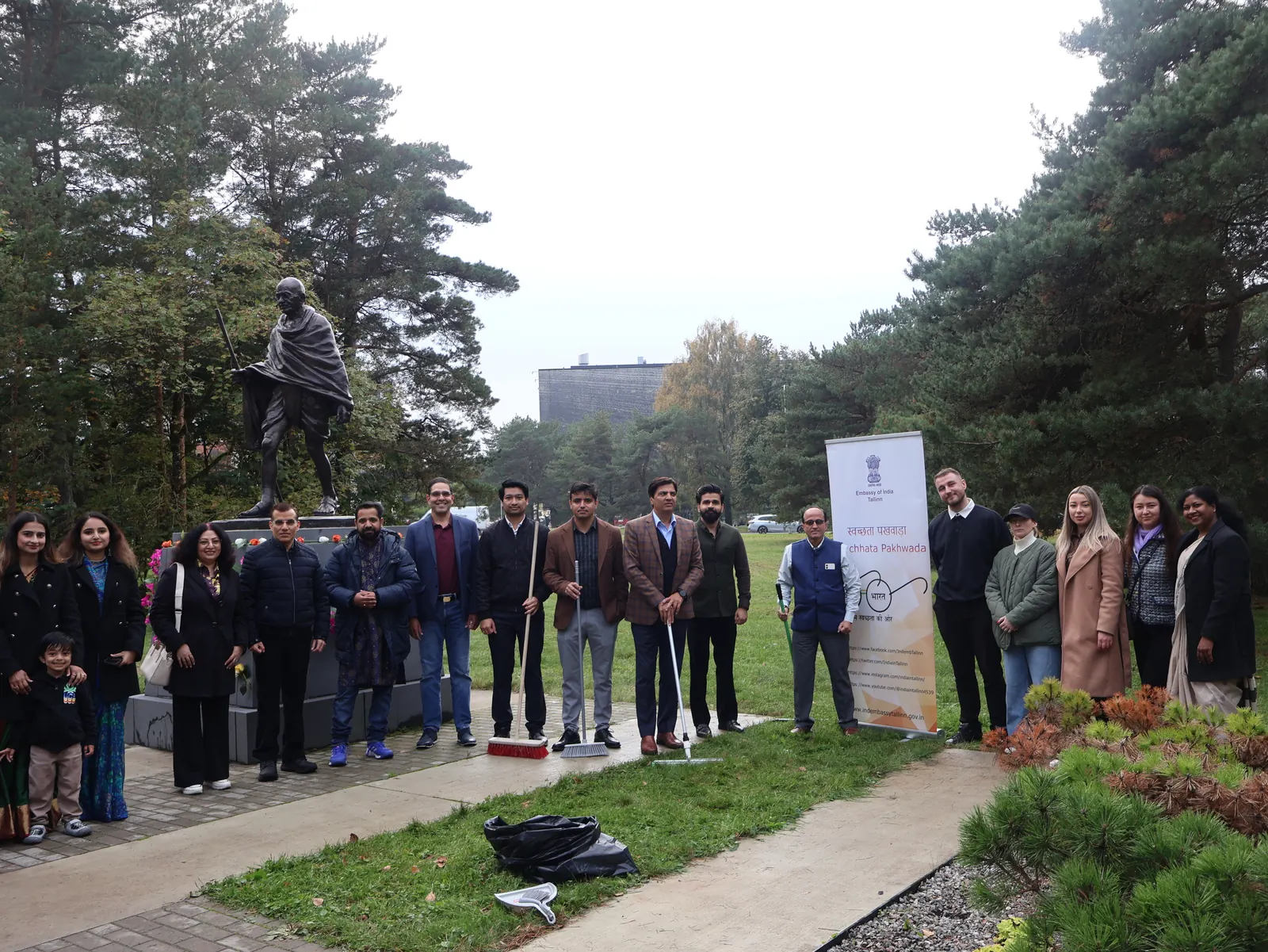
The Embassy of India in Tallinn also reaffirmed its commitment to the ideals of Swachhata and Jan Bhagidari through its participation in the Swachhata Hi Seva campaign. Embassy officials, together with members of the Indian community in Estonia, participated in a special cleanliness drive at the statue of Mahatma Gandhi in Tallinn, paying tribute to the Father of the Nation and his enduring message of cleanliness, civic responsibility and service.